How to measure without a tape measure
How to measure without a tape measure: use objects with known sizes like letter paper, a credit card or a quarter, plus string, folded paper and your phone.
October 9, 2026
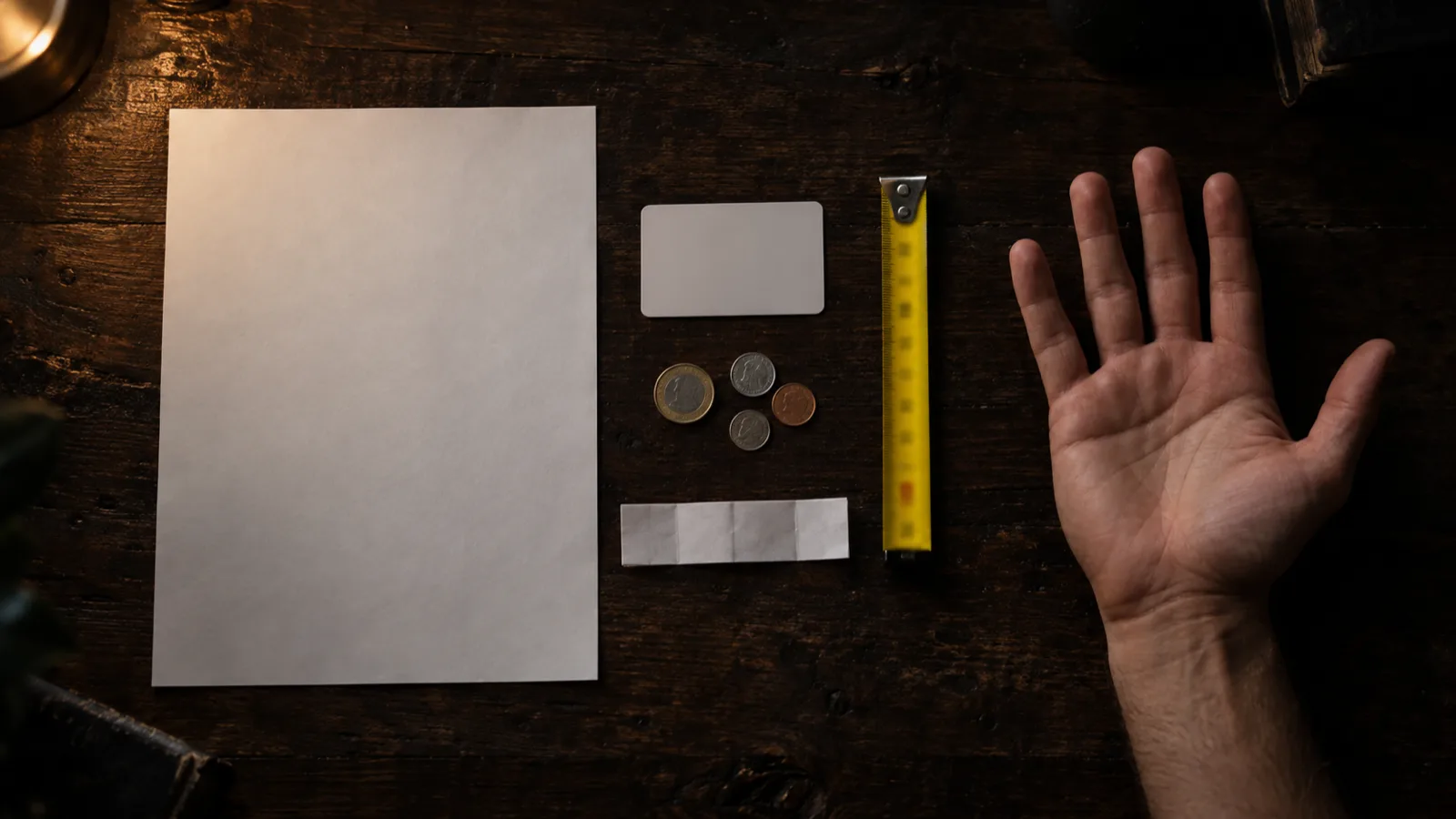
To measure without a tape measure, use an object whose size is fixed by a standard, such as a sheet of US letter paper (8.5 × 11 in), a credit card (3.370 × 2.125 in) or a quarter (0.955 in across). Lay it end to end along what you’re measuring, count, and multiply. For longer distances, use a string or your pace, and for anything you’ll cut or order, confirm with a real tape later.
Reference objects with exact sizes
These items are made to published specifications, so they’re reliable stand-ins for a ruler. Paper, cards and coins vary very little from one piece to the next.
| Object | Inches | Millimeters | Notes |
|---|---|---|---|
| US letter paper | 8.5 × 11 in | 215.9 × 279.4 mm | Standard US printer paper |
| A4 paper | 8.27 × 11.69 in | 210 × 297 mm | Standard outside North America |
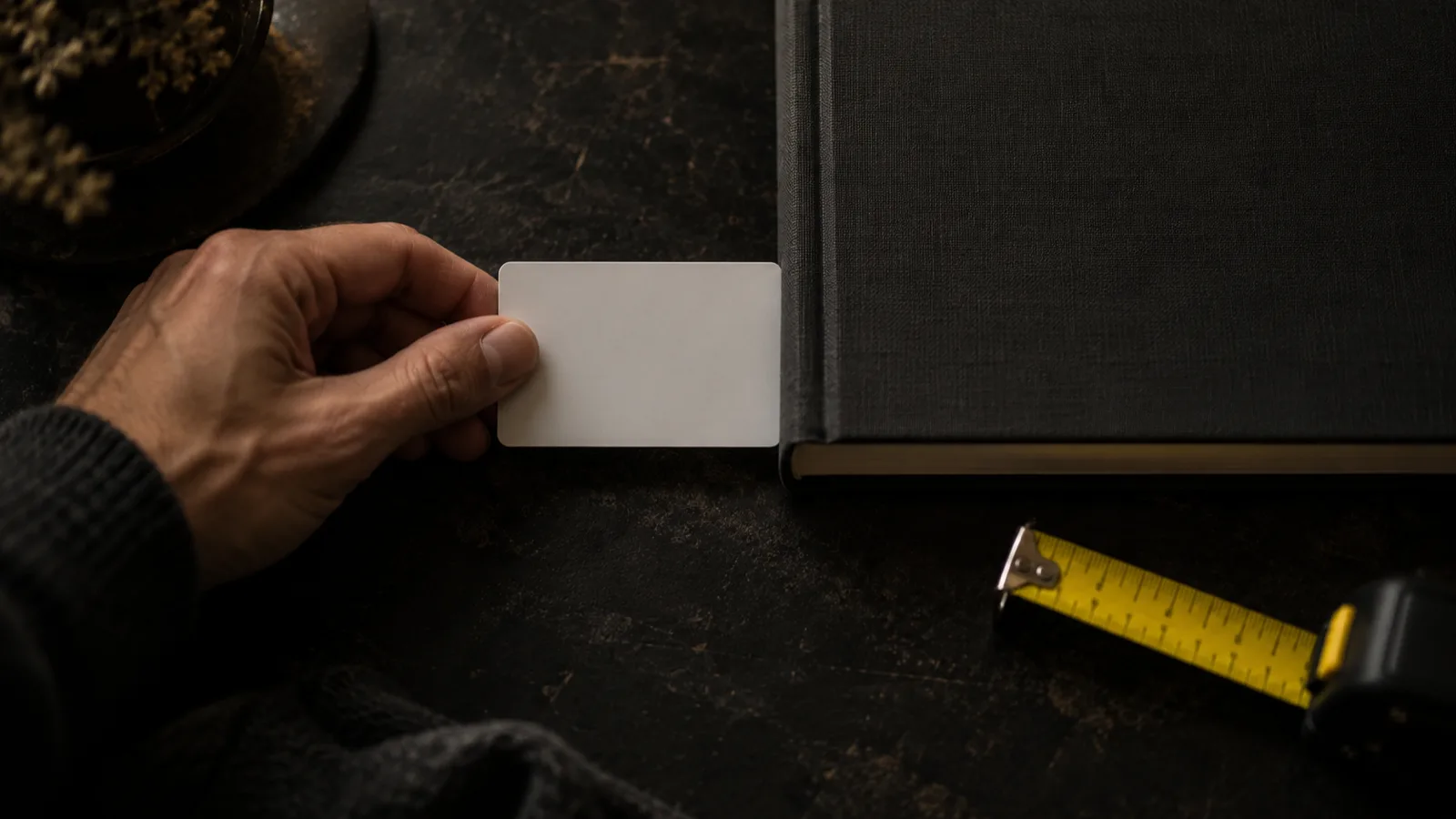
| Credit card, debit card, driver’s license | 3.370 × 2.125 in | 85.60 × 53.98 mm | ISO/IEC 7810 ID-1 size |
| US dollar bill (any denomination) | 6.14 × 2.61 in | 156 × 66.3 mm | All current US notes are the same size |
| US quarter | 0.955 in diameter | 24.26 mm | US Mint specification |
| US penny | 0.750 in diameter | 19.05 mm | US Mint specification |
| 1 euro coin | 0.915 in diameter | 23.25 mm | Same in every euro country |
A few things to keep in mind:
- Check cards and bills for wear. A card with chipped edges or a bill that has been trimmed or torn will be short.
- Gift cards, hotel keys and loyalty cards are often ID-1 size too, but not always. A bank card is the safest choice.
- Coins work best for small things: a screw head, a hole, a gap under a door.
How to use them
- Place the object at one end of what you’re measuring, with its edge exactly on the starting point.
- Mark the far edge with a pencil or your fingernail.
- Move the object so its starting edge sits on the mark and repeat.
- Count the full lengths, then estimate the leftover piece.
Example: a shelf is 4 credit-card lengths plus about half a card. That’s 4 × 3.37 = 13.48 in, plus about 1.7 in, so roughly 15.2 in. Each step adds a little error, so use the longest reference object that fits the job.
Fold paper to get smaller units
A sheet of paper doubles as a ruler once you fold it. Folding in half and in half again gives you accurate halves, quarters and eighths without any marks.
| Letter paper edge | Half | Quarter | Eighth |
|---|---|---|---|
| Long edge, 11 in | 5.5 in | 2.75 in | 1.375 in (1 3/8 in) |
| Short edge, 8.5 in | 4.25 in | 2.125 in (2 1/8 in) | 1.0625 in (1 1/16 in) |
For A4, the long edge folds into 148.5, 74.25 and about 37 mm, and the short edge into 105, 52.5 and about 26 mm.
Crease each fold sharply and line up the corners carefully. A sloppy first fold carries its error into every fold after it.
Use string or a paper strip for curves and long runs
String handles the things a rigid object can’t: a waist, a pipe, a curved sofa arm or a distance longer than your reference object.
- Lay the string along the path, or wrap it around the object.
- Pinch or mark the string where it meets the starting end.
- Straighten it on a flat surface and measure it with your reference object, laying a sheet of paper along it repeatedly.
Use string that doesn’t stretch, such as cotton twine or dental floss. A strip of paper cut from the long edge of a sheet works too, and you can write marks directly on it. Ribbon, yarn and rubber bands stretch and read short or long depending on how hard you pull.
Body measurements: calibrate once
Your hands, feet and stride are always with you, but they vary a lot from person to person. Average figures from a chart can be off by an inch or more for any one person. Measure your own once against a known object, such as a sheet of letter paper, and write the numbers down or save them in your phone.
| Body reference | How to use it | What to calibrate |
|---|---|---|
| Thumb width | Small gaps and widths | Width at the knuckle |
| Hand span | Furniture and shelves | Thumb tip to little finger tip, hand stretched flat |
| Foot length | Floors and rooms, heel to toe | Length of your shoe, since you’ll usually wear it |
| Pace | Yards, rooms, long walls | Count steps over a known distance and divide |
To calibrate your pace, walk a distance you know, such as a run of floor tiles you’ve measured or a sports field marking, at a normal stride. Count the steps and divide the distance by the count. Walk it two or three times and average the results.
Body measurements are good for estimates within a few inches. They’re fine for checking whether a couch will fit against a wall, and too rough for cutting trim or ordering blinds.
Use your phone
A phone helps in two ways.
As a reference object. Your phone’s exact height and width are listed on the maker’s spec page. Look them up once and you have a known length in your pocket.
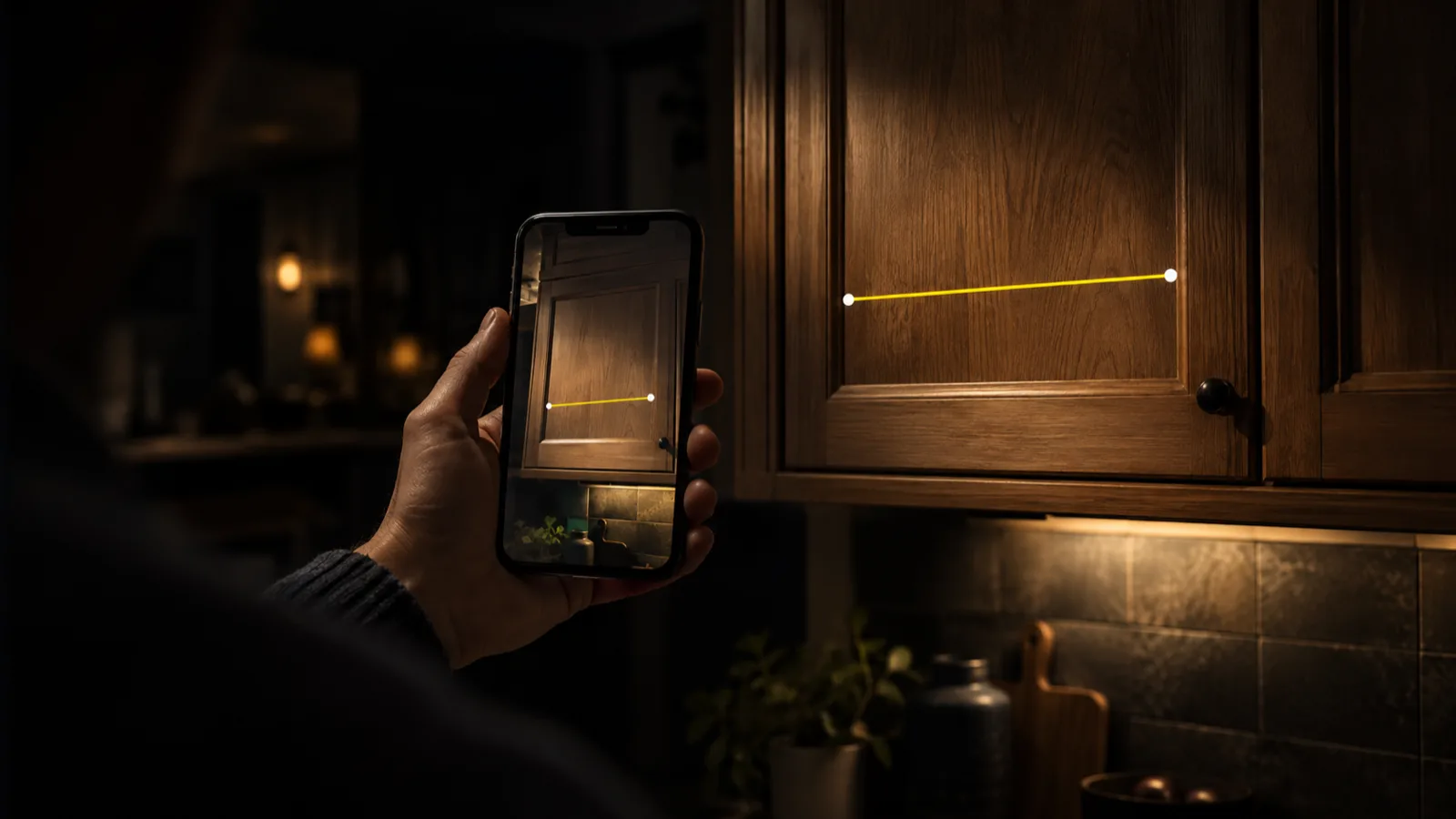
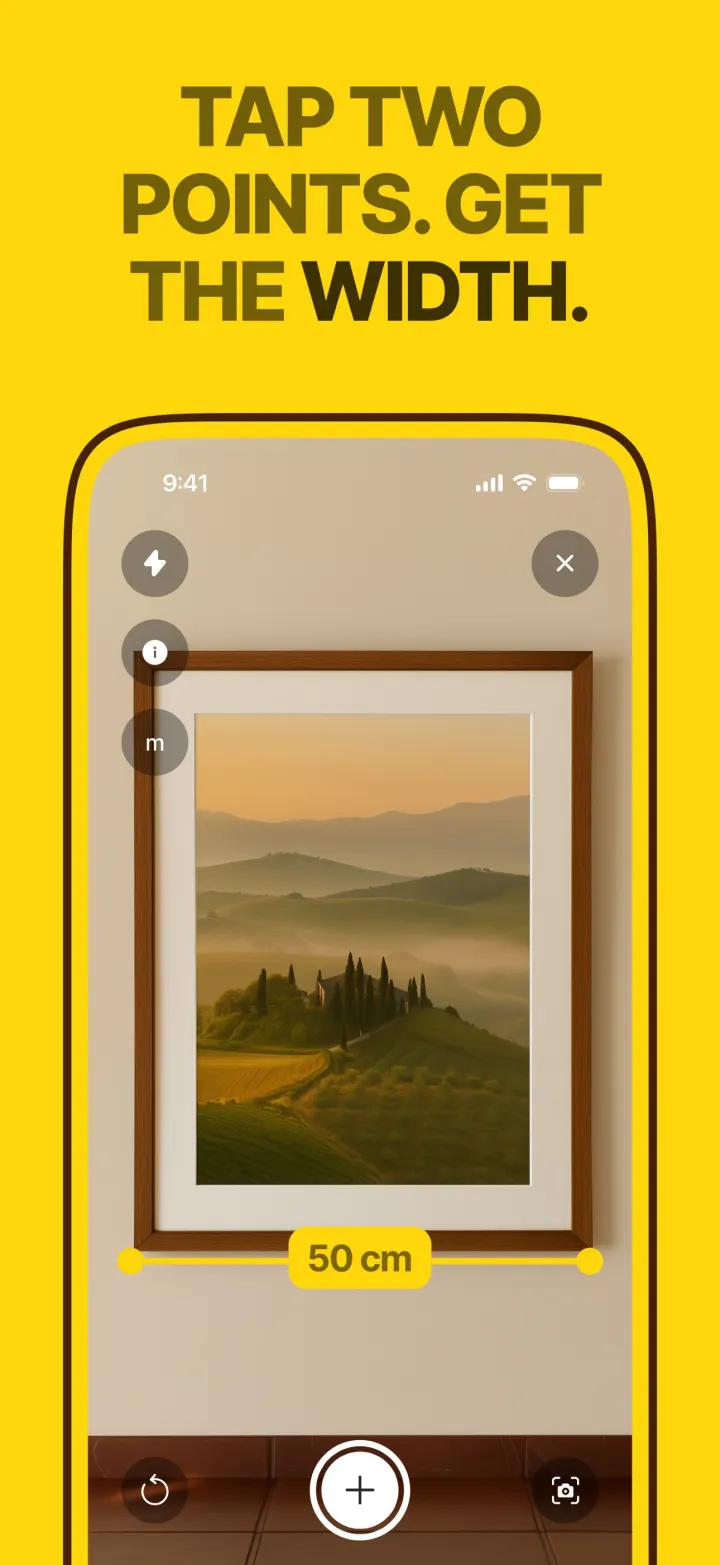
As an AR measuring tool. For longer distances, an augmented reality app measures with the camera. Point it at one end, tap, move to the other end and tap again. The AR ruler app on iPhone works this way, and Apple’s built-in Measure app does too; see how to use the iPhone Measure app. AR readings are close but not exact, and the error grows with distance. Good light and a textured surface help.
Printable and on-screen rulers
Printable rulers and on-screen rulers can work, but only if their scale is right.
- Printable rulers print correctly only at 100% scale. In the print dialog, choose “Actual size” or set the scale to 100%. “Fit to page” shrinks the ruler. After printing, check the printed scale against a credit card or a sheet of letter paper.
- Screen rulers depend on the display’s pixel density, which differs between devices. A good one asks you to calibrate it by placing a credit card or coin on the screen and matching an outline. Without calibration, the marks can be off by a noticeable amount.
Once you have a working ruler on paper or screen, how to read a ruler explains the fraction marks.
When to find a real tape
Improvised methods are good for quick checks, rough planning and small items. Use a tape measure for anything you’ll cut, order to size or install, such as blinds, trim, flooring or furniture for a tight alcove. A measurement that’s off by a quarter inch can mean a blind that doesn’t fit the window.
Sources
- ISO/IEC 7810:2003 Identification cards: Physical characteristics, ISO: the ID-1 card size is 85.60 × 53.98 mm (the current edition is ISO/IEC 7810:2019).
- Coin Specifications, United States Mint: the quarter is 0.955 in (24.26 mm) across and the cent is 0.750 in (19.05 mm).
- $1 Note, U.S. Currency Education Program: since 1929 all Federal Reserve notes measure 6.14 × 2.61 inches.
- Common sides, European Central Bank: the 1 euro coin is 23.25 mm in diameter.