How to measure for curtains
How to measure for curtains: where to hang the rod, how wide the panels should be, which length to buy, and a worked example using standard US panel sizes.
October 9, 2026
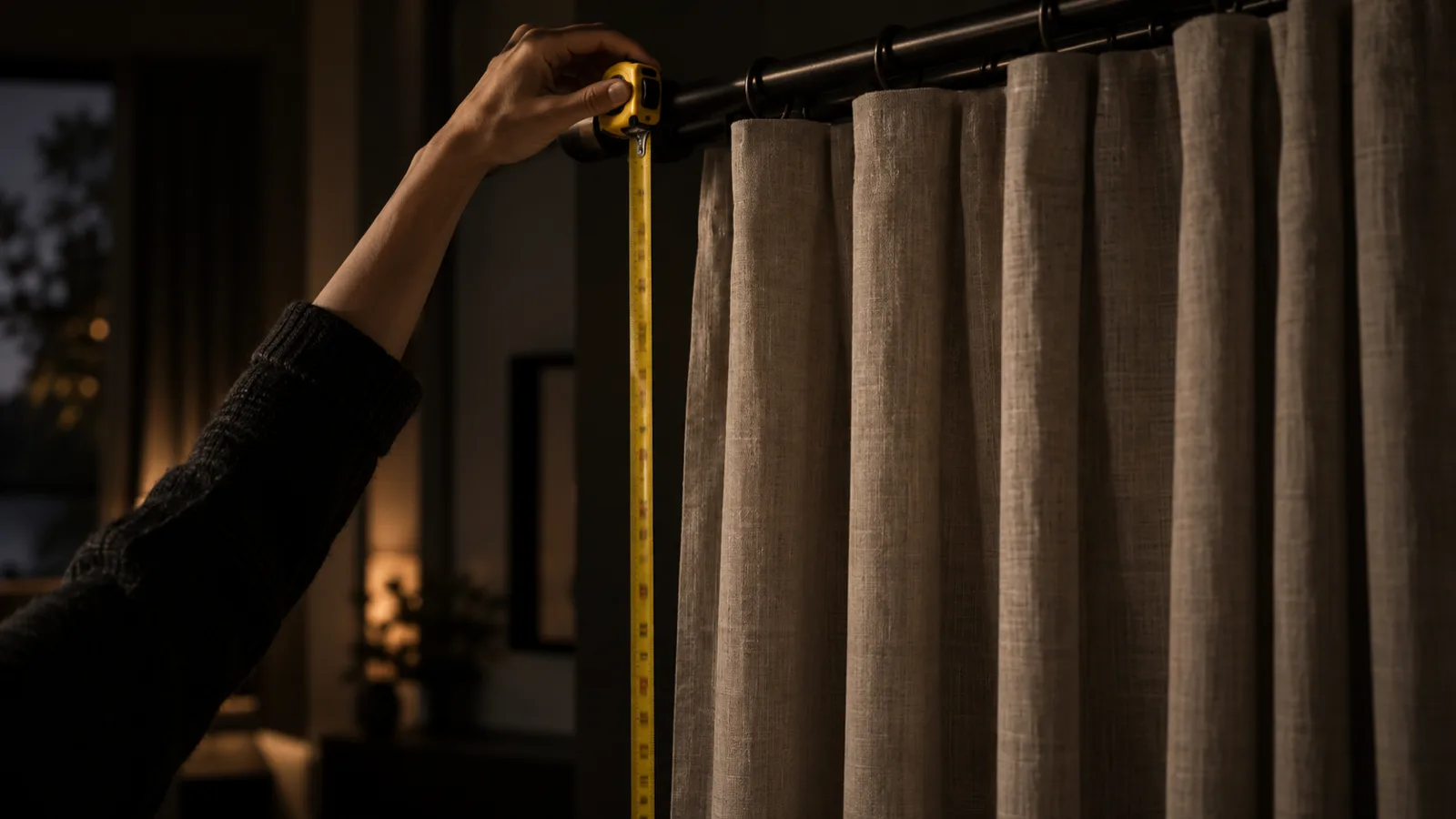
To measure for curtains, decide where the rod goes first, then measure the rod’s width and the drop from the rod to where you want the curtains to end. Multiply the rod width by about 1.5 to 2.5 to get the total panel width you need, and pick the standard length closest to your drop. Measuring the bare window alone gives you curtains that look short and skimpy.
What you need
A steel tape measure, a pencil, a step stool and a notepad. Write every number down as you go, and measure to the nearest 1/8 inch. If you need a refresher on the small marks, see how to read a tape measure. If the window itself still needs measuring, how to measure a window covers trim-to-trim width and height.
Step 1: Decide the curtain rod height
The rod position sets every other number, so settle it before you shop.
- Common starting point: 4 to 6 inches above the top of the window trim.
- Higher option: halfway between the trim and the ceiling, or a few inches below the ceiling. A higher rod makes the window and the ceiling look taller.
- Practical limit: leave enough room above the rod for the brackets and for the rings or fabric heading to clear any crown molding.
These are design guidelines, and retailers give slightly different figures. Home Depot’s guide, for example, says anywhere from a few inches above the trim to a few inches below the ceiling. Mark the bracket height lightly on the wall with a pencil and a level so both sides match.
Step 2: Decide the rod width
Measure the window from the outside edge of the trim on one side to the outside edge on the other. Then add an extension on each side so open curtains can stack beside the window instead of covering the glass.
Advice on the extension varies. Some sources suggest 3 to 6 inches per side, others 8 to 10 inches or more. Use the low end for a narrow wall or lightweight panels, and the high end for thick, lined curtains that bunch up when open and would otherwise block light.
Rod width = trim width + left extension + right extension. Measure the rod between the brackets and leave out the decorative finials.
Step 3: Work out panel width (fullness)
Curtains look best when the fabric is gathered, so the combined width of all panels should be wider than the rod. The ratio is called fullness.
| Look | Total panel width |
|---|---|
| Flat, tailored, mostly decorative | about 1.5 × rod width |
| Standard gathered look (most grommet and rod pocket panels) | about 2 × rod width |
| Very full, or sheer fabric | about 2.5 × rod width or more |
The right ratio also depends on the heading style. Pinch pleats are often made with fullness already sewn in, so check how the maker lists the width. Ready-made panels are sold one at a time in most US stores, so check whether the width on the label is per panel or per pair, then add up the panels you plan to hang.
Step 4: Measure the curtain length
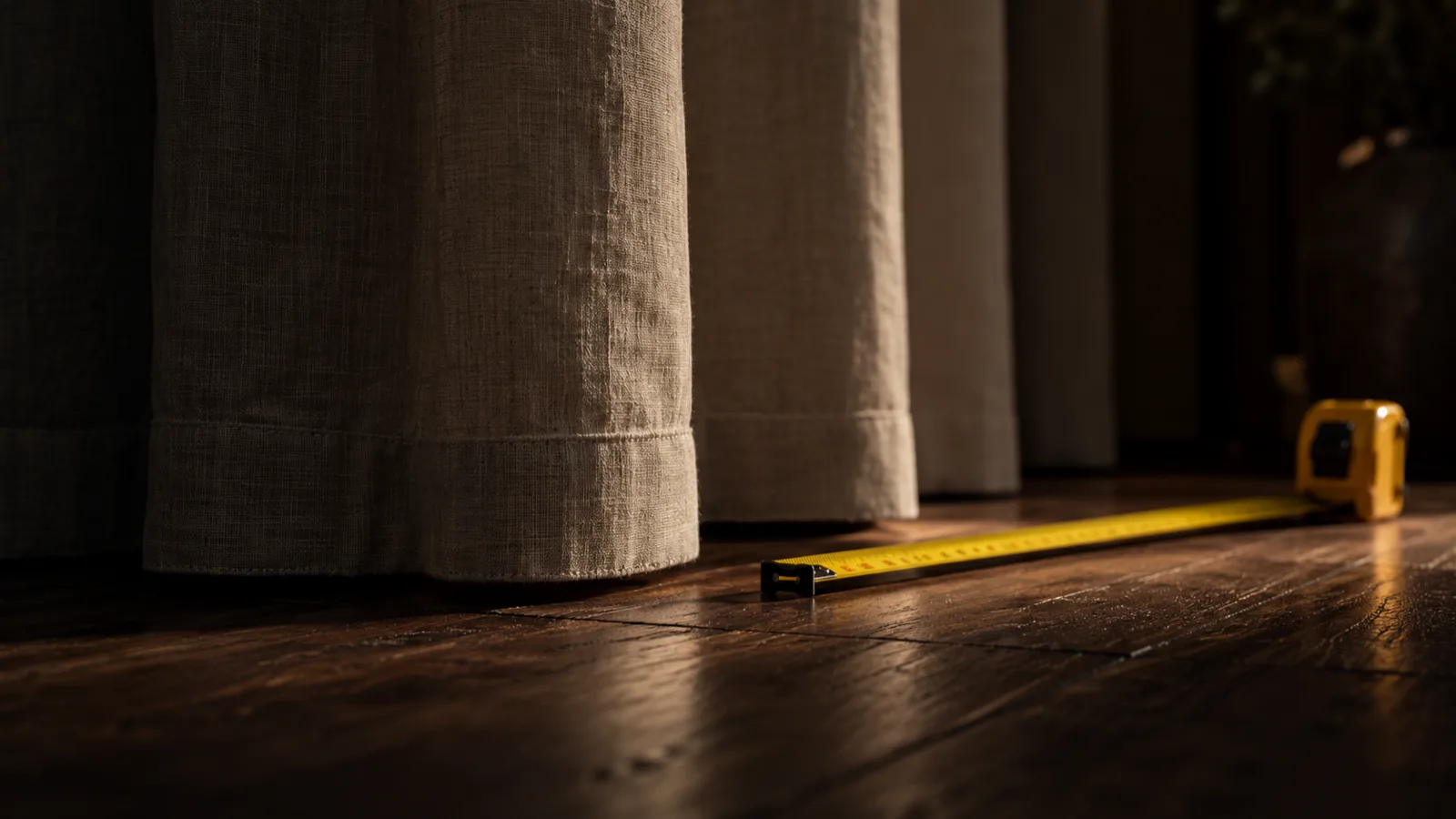
Measure from the rod down to where the curtains should end. Measure at both sides of the window and in the middle, because floors and sills are rarely perfectly level, and use the shortest reading for a floor-skimming length.
Common finish points
- Sill length: the hem sits just above the windowsill. Good for kitchens or windows above furniture.
- Below sill (apron length): the hem ends a few inches below the sill, often 4 to 6 inches below, covering the trim apron.
- Floor length: the hem clears the floor by about 1/2 inch so the fabric doesn’t drag or collect dust. Some custom makers use 1/4 to 3/4 inch.
- Puddle: the fabric rests on the floor by roughly 3 to 6 inches. It looks relaxed but suits curtains you rarely open and close.
Where to measure from
The length printed on a panel runs from the top of the panel to the hem. How that relates to the rod depends on how the panel hangs.
- Rod pocket and back tab: the rod runs through the fabric, so measure from the top of the rod. A small heading of fabric above the rod adds very little.
- Grommet (eyelet): the top of each grommet rests on the rod and the fabric above it stands up past the rod, typically around an inch. Measure from the top of the rod and check the maker’s note on how much fabric sits above the grommet.
- Rings with clips: the rings and clips hang the panel lower than the rod. Measure from the bottom of the ring’s eye, where the clip hooks on, down to the finish point. Rings and clips can add 2 to 3 inches.
When the maker gives measuring instructions, follow theirs.
Standard US curtain lengths
| Panel length | Metric | Typical use |
|---|---|---|
| 63 in | 160 cm | Sill or below-sill length on many windows |
| 84 in | 213 cm | Floor length with the rod about 7 ft (84 in) up |
| 95 in or 96 in | 241 or 244 cm | Floor length with the rod about 8 ft (96 in) up |
| 108 in | 274 cm | Floor length with the rod about 9 ft (108 in) up, so ceilings above 9 ft |
| 120 in | 305 cm | Floor length with the rod about 10 ft (120 in) up, for high ceilings and tall windows |
Brands differ slightly. Some sell 95 inch panels, some 96, and a few list 94. Because the rod height is up to you, it’s often easier to choose a standard length first and set the rod so that length lands where you want it.
Worked example
A living room has a 9 ft ceiling (108 in). The window trim measures 48 in wide and its top edge sits 88 in above the floor. You want floor-length grommet curtains that clear the floor by 1/2 in.
- Rod height. A 95 in panel plus 1/2 in of clearance needs the top of the rod at 95 1/2 in. That’s 7 1/2 in above the trim and 12 1/2 in below the ceiling, which leaves plenty of room for brackets.
- Rod width. Add 6 in on each side: 48 + 6 + 6 = 60 in between the brackets. Buy an adjustable rod that covers 60 in.
- Panel width. For a standard gathered look, 60 × 2 = 120 in of total panel width. Two panels about 60 in wide each would do it. Two 54 in panels give 108 in, or 1.8× fullness, which is still a full look for grommet curtains.
- Check. Hang one panel before you hem or return anything, and confirm the gap at the floor at both ends.
If the rod had to sit lower, say at 84 1/2 in, an 84 in panel would fit instead. The window doesn’t change; only the rod position does.
Tips for a clean result
- Measure with a steel tape and keep it straight. A fabric tape stretches, and a sagging tape over a long drop can read short.
- Install the rod before you take the final length measurement whenever you can.
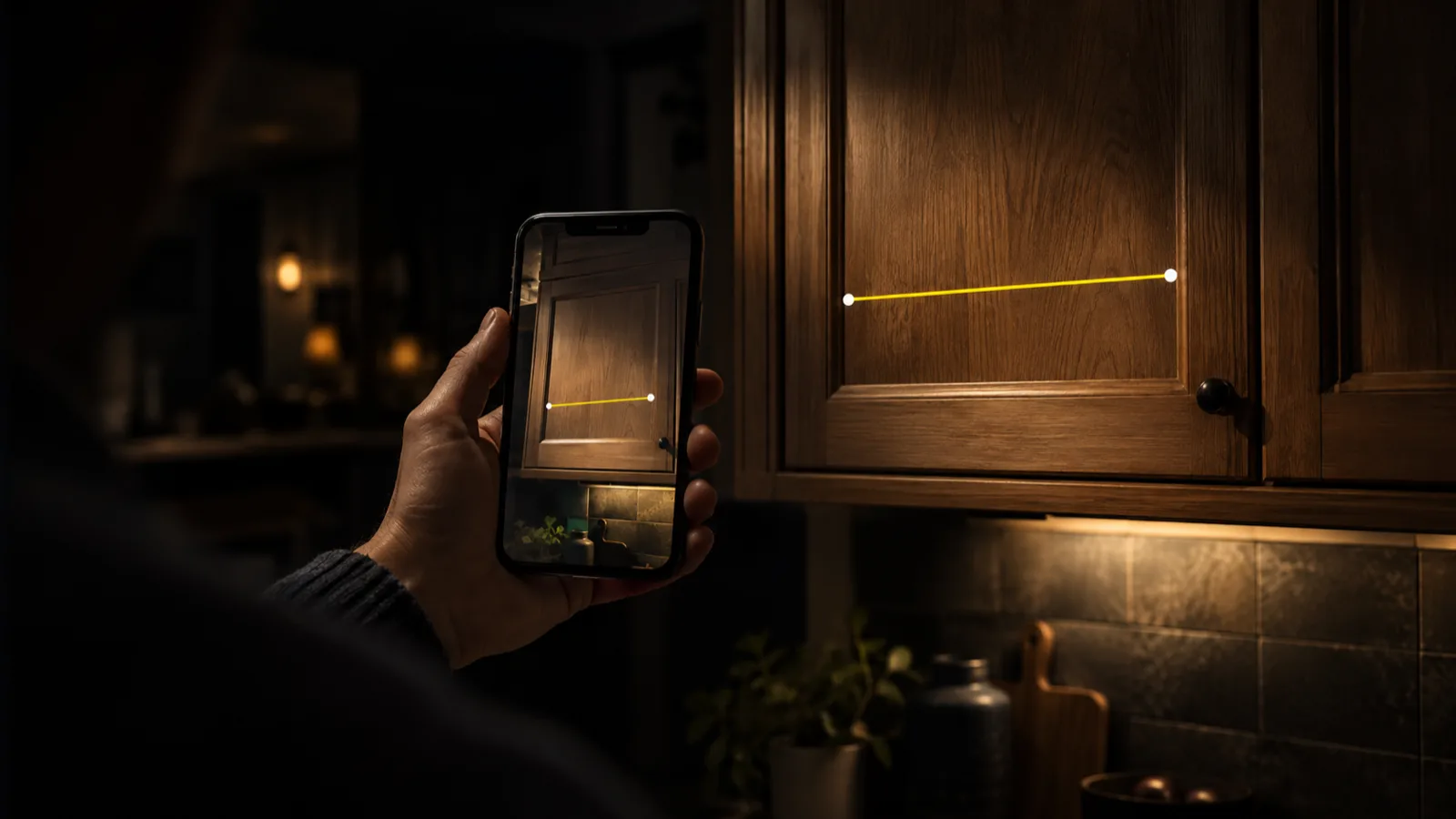
- For a quick width check on a wide wall, the AR ruler app on an iPhone can give you a close estimate from across the room. AR readings drift a little with distance, so confirm with a real tape before you cut or hem fabric.
- Wash or steam panels before final hemming if the label warns about shrinkage.
Sources
- How to Measure Curtains, The Home Depot: rod height from a few inches above the trim to a few inches below the ceiling, a rod that extends 8 to 10 in past each side, standard lengths of 63, 84, 96, 108 and 120 in, and 3 to 6 in of extra length for a puddle.
- How to Measure for Curtains in 5 Steps, The Shade Store: total panel width of 1.5 to 2 times the rod span, 2.5 to 3 times for sheers, and a floor clearance of 1/2 or 1/4 inch for a floating hem.